RMU ECR Hub
Empowering Early Independence – Unlocking Potential
It is a central concern of RMU to make researchers in early career stages (Early Career Researchers, ECRs) visible as a shared stakeholder group, to attract talent to the region, and to retain it over the long term.
The graduate academies of RMU have been working closely together for many years to support ECRs. Under the RMU Hub for ECRs, they bundle needs-based qualification programs, networking formats, and financial support opportunities—across locations and tailored to the target group. Through this collaboration, existing offerings are interconnected, new programs are aligned, and made accessible to all ECRs. In line with these goals, RMU has joined the Coalition for Advancing Research Assessment (CoARA) and, through its published action plan, places a strong focus on supporting ECRs.
With the aim of creating optimal conditions for individual career paths in academia, industry, or society—both regionally and internationally—we offer support in four key areas: career orientation and planning, competency development, networking, and financial support to foster early independence.
Career Orientation and Planning
The RMU Hub for ECRs supports early career researchers in shaping their individual careers—both within and beyond academia. Its aim is to make diverse career paths transparent, to foster contacts with non-academic employers—particularly in the region—and to support researchers in transitioning to the next phase of their careers.
Career Orientation
Each year during summer, a two-week program for advanced PhD Candidates, R2, and R3 researchers is held in the form of the RMU Postdoc Career Weeks, featuring workshops, panel discussions, and advisory sessions on career paths within and beyond academia. Local, national, and international funding opportunities are presented, along with experience reports from professional practice and research, particularly from RMU alumni.
In addition, a wide range of further opportunities is offered, including the career conference “Kurswechsel” for women researchers, excursions to employers in the region, and individual career counseling sessions.
Career Planning in Academia
The RMU Hub for ECRs jointly organizes the event format “Appointment Procedures – Learning from Experience,” which rotates among the three RMU locations. It provides insights into academic appointment processes—from the application stage and presentations to negotiations. The format is aimed at R2 and R3 researchers and is tailored to the academic cultures of the respective locations (TU Darmstadt: natural sciences, engineering, and computer science; Goethe University Frankfurt: humanities; Johannes Gutenberg University Mainz: social sciences).
In addition, we support our R2 and R3 researchers through RMU-wide Dual Career Support services.
Competency Development
At all three universities, ECRs have access to a broad range of workshops that promote academic, professional, and transferable skills.
By opening selected formats to researchers from partner locations, a broader and more diverse range of offerings is created. This not only increases choice but also enhances the utilization and effectiveness of the programs.
Networking & Exchange
The aim is to connect ECRs across disciplines and locations. Networking enables the exchange of knowledge and experience, enhances career opportunities, and offers opportunities for mutual support. The RMU Hub for ECRs therefore organizes:
RMU Social Welcoming Events
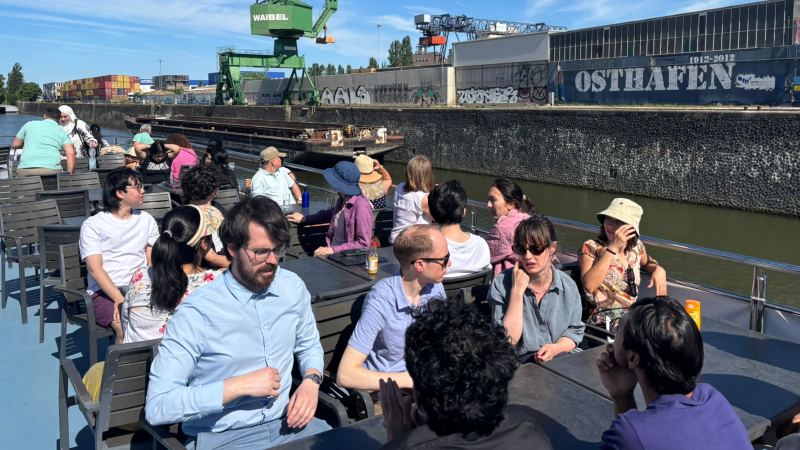
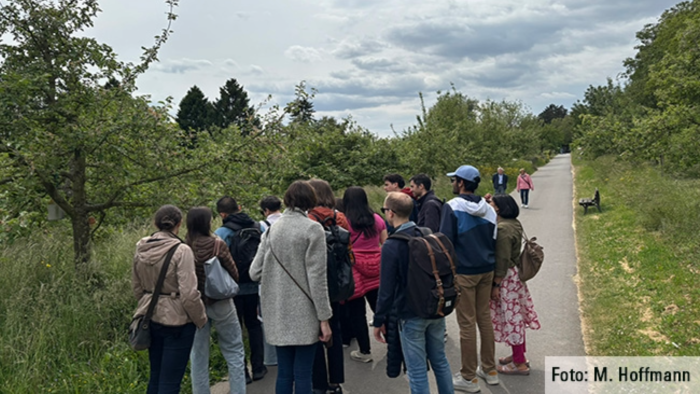
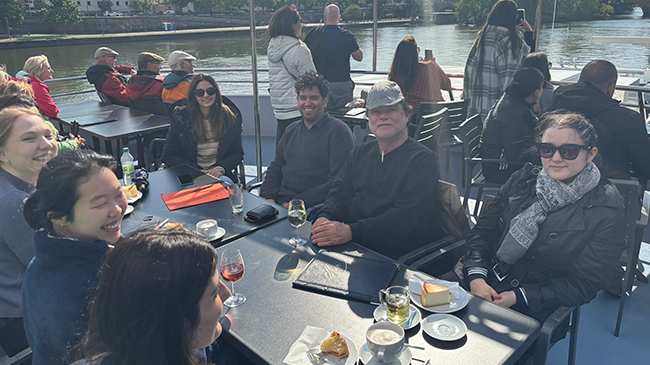
These events primarily invite international researchers to get to know one another across locations and to explore the Rhine-Main region. At the same time, the wide range of opportunities within the RMU area is presented, supporting both professional and personal integration.
Financial Support for Building Early Independence
Through the funding line RMU Research Initiative Fund: “Early Career Researchers, the RMU Hub for ECRs supports cross-location initiatives by ECRs, such as joint third-party funding applications, publication projects, or science communication formats.
In addition, the Johanna Quandt Young Academy (JQYA) at Goethe University Frankfurt offers R3 researchers within the whole RMU a forum for interdisciplinary and intergenerational exchange, including access to needs-based funding opportunities for their own research projects.