High-tech for optimized cancer treatment in children: Interview with Professor Torsten Frosch of TU Darmstadt, coordinator of the LOEWE “MultiDrug-TDM” research cluster
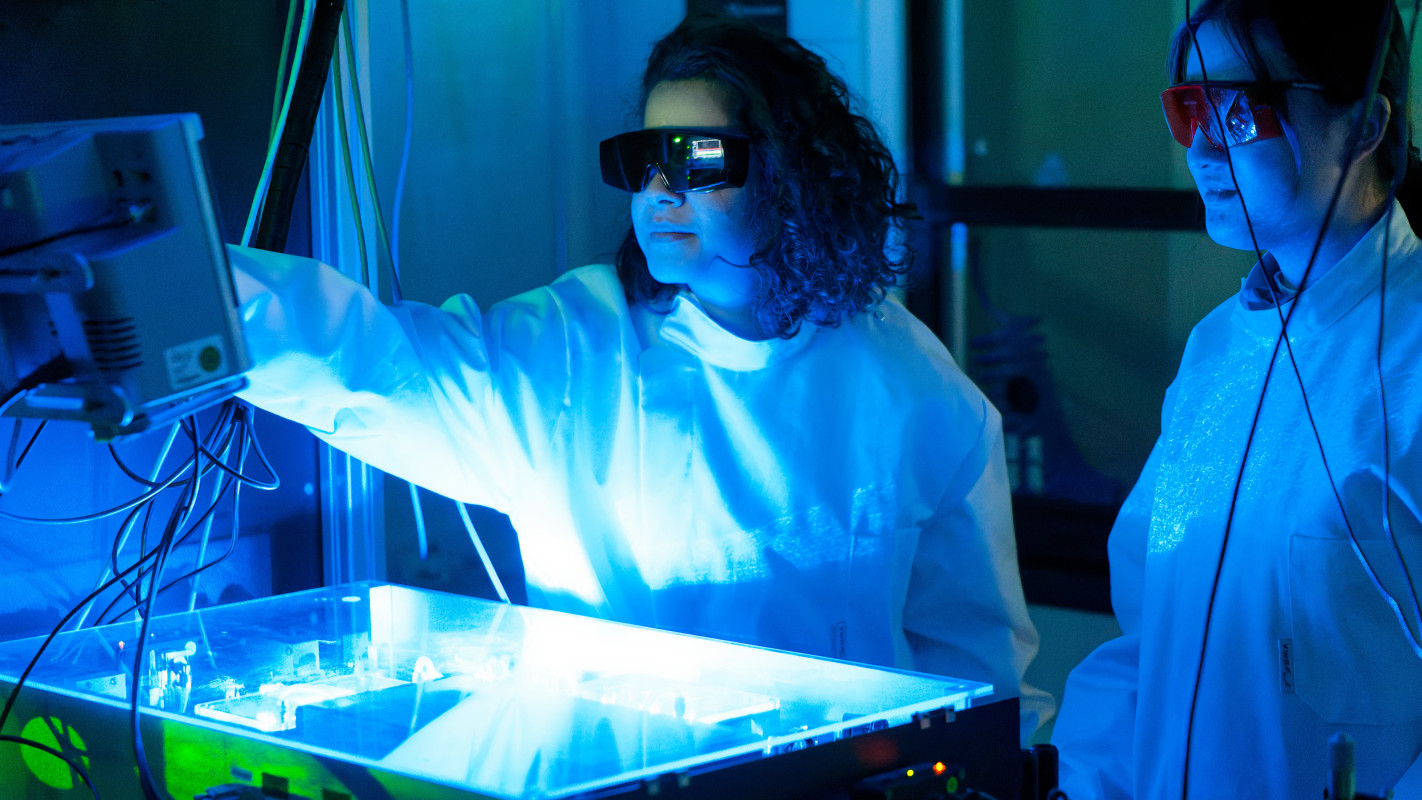
Photo: FG Biophotonik
A novel intelligent sensor system that significantly improves cancer treatment for paediatric patients: Researchers from TU Darmstadt and Goethe University Frankfurt have been working on this interdisciplinary innovation since the start of the year as part of the “MultiDrug-TDM” project. Coordinator Professor Torsten Frosch from TU Darmstadt provides an insight into the research project.
Mr Frosch, how did the idea for the ‘Personalised biomedical engineering for therapeutic drug monitoring at the point of care in paediatric oncology – MultiDrug-TDM’ project come about, and how did the collaboration between the two RMU universities develop?
The development of technologies that can be directly used at the point of care and enable personalised therapy based on therapeutic drug monitoring (TDM) has been a central focus of my research group for several years. We are continuously advancing this approach in close collaboration with colleagues from the medical field. When I started at Technical University of Darmstadt, it was particularly important to me to explore this highly relevant research topic within the local focus area of oncology and to expand it further.
As a father, I am also very aware that, from a pharmacokinetic perspective, children are not simply ‘little adults’. Therefore, I sought dialogue from early on with experts in pharmacology and paediatric oncology in Frankfurt. Together, we identified and refined key research questions.
And who were the project’s initiators?
The core idea emerged from our Biophotonics group. Initially, we developed the idea and discussed it in parallel with colleagues at the Department of Electrical Engineering and Information Technology (etit) at TU Darmstadt and with the experts at the Faculty of Medicine in Frankfurt. In the next steps, we were able to involve experts from other departments, thereby complementing highly relevant expertise for this interdisciplinary challenge. Together, we then developed a strategy for pursuing our goal regarding TDM at the point of care of vital drugs in the paediatric cancer therapy.
Why is an interdisciplinary approach the best way to realise such a project?
I would even go so far as to say: such a biomedical engineering project cannot best be realised, but can only be realised as an interdisciplinary approach. Truly groundbreaking innovations arise when a specific need, a viable solution and the necessary implementation expertise come together. In the context of personalised biomedical technology, this means that medical need, technological innovations as well as clinical and pharmacological expertise must be closely intertwined. It is only this interplay that makes it possible to develop solutions which are not only convincing in theory, but are highly likely to find their way into clinical application – and thus make a real difference for patients.
“Complex challenges in biomedical engineering can only be solved when we combine all perspectives, learn from each other and develop a common language.” How successful are you in developing this common language across disciplines, and what are the challenges involved?
This common language emerges through close collaboration. I can illustrate this with an example: in the context of medicine, sensor technology and data analysis, the term ‘real-time’ refers to different time scales: from minutes down to sub-milliseconds. By discussing this together, we could develop targeted solutions for specific medical needs.
Here, for example, we have learned that, from a physician’s perspective, it is sufficient for drug monitoring in paediatric oncology if we provide measurement results during ward rounds – this gives us the opportunity to iteratively optimize our hardware parameters for the best possible result using rapidly collected measurement data, so that the device can be used without specially trained technical staff. This adaptive approach of MultiDrug-TDM is a first step towards self-optimizing, smart biomedical technology of the future.
What different strengths or existing research interests are brought together by the universities of Frankfurt and Darmstadt?
MultiDrug-TDM brings together outstanding Hessian expertise from various research fields and disciplines into a strong alliance. Technological innovations in biosensing, biophotonics, nanomaterials and micro-nanofluidics, 3D printing technology, as well as AI-supported signal processing and data analysis – represented by seven departments at TU Darmstadt – are combined with cutting-edge medical expertise in paediatric oncology and clinical pharmacology at the Faculty of Medicine at Goethe University Frankfurt.
Can you give a specific example of sub-projects that the two universities are currently working on in an interdisciplinary manner within the framework of MultiDrug-TDM?
A key objective of our project is to explore a methodology for the direct and simultaneous determination of drug levels. In the “Drug Sensing” sub-project, enhanced Raman spectroscopy is being researched for this purpose at TU Darmstadt, whilst at Goethe University Frankfurt, the cross-validation of the results is carried out using sophisticated mass spectrometry (LC-MS/MS). Another example is the “Clinical Demonstrator” sub-project: here, the measurement system is being developed at TU Darmstadt, whilst the clinical expertise and the necessary samples from paediatric oncology are being provided by the physicians in Frankfurt. This close integration of technological advancement and clinical need enables us not only to devise innovative approaches, but also to evaluate them under real conditions.
Cross-university collaborations are not that uncommon. Do you see advantages in working on a project within an established network such as the RMU?
For our project, it is crucial to pool the various areas of expertise within an integrated system and test the approach under realistic conditions. The physical proximity of the participating partners provides an immediate efficiency gain: time loss due to sample transport, logistics and accompanying documentation is significantly reduced, which means that the results are available more quickly and the iterative optimization process is accelerated. The secure and structured exchange of data and results is also significantly streamlined by shared digital infrastructures such as the HessenBox. Another key impact lies in the interdisciplinary training and support for early-career researchers: close networking enables young researchers to familiarise themselves with different disciplines and working methods directly on site. This not only fosters a deeper understanding of connected processes of different disciplines but also cultivates a new generation of scientists who consider and actively shape the translation of ideas.
The questions were posed by Silke Paradowski.