Lecture series: ‘My mother is a porcupine!’ Unruly hair, unruly mothers?
Date
27 January 2027, 4:15 pm – 5:45 pm CET
Location
Technical University of Darmstadt
Description
Lecture by Frauke Pauwels (Universiteit Antwerpen) as part of the lecture series "Unruly Hair – From Disobedience to Agency. Transdisciplinary Perspectives on Children's Media".
Location: Technical University of Darmstadt, room: S101/A4, Karolinenplatz 5, 64289 Darmstadt
Online participation via Zoom: LINK
Language: English
Abstract:
Numerous picturebooks depict children who do not want to wash, comb, or cut their hair. For many mothers, not being able to wash or comb their hair when they would like to do so is a symptom of the ambivalence and temporality of mothering and motherhood. In many children's stories, hair care metonymically stands for hygiene and moral goodness, or serves as a form of punishment or reward within intimate relationships, such as that between mother and child. More broadly, cultural expressions regularly use hair as a metaphor for power, while the loss of hair symbolizes submission. Yet, apart from Andersen's fairy tale The Story of a Mother and the Greenlandic tale of the Mother of the Sea, mothers' hair seems to be largely absent. In contrast, some recent picturebooks depict mothers' hair as a site of controversy. How might such portrayals contribute to more varied representations of motherhood and mothering?
Starting with Secreto de familia (Isol, 2003), Frauke Pauwels will be combing through different historical periods, genres, and cultural contexts to discuss the various ways in which children's picturebooks speak to mothers through depictions of hair. Combining close reading and visual analysis of a small corpus with an examination of reception, she will explore how picturebooks are plaiting motherhood through their images of hair.
About the lecture series:
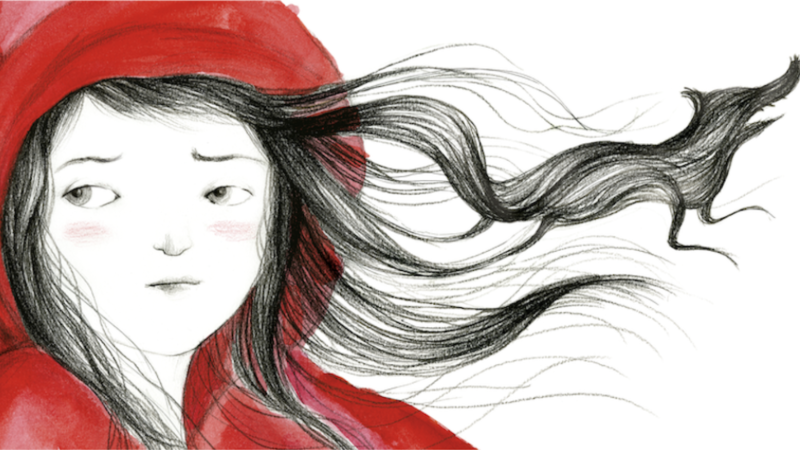
From dust-free shoes to a neatly combed head, the “well-groomed” child becomes the focal point of discursive negotiations surrounding contemporary ideals of hygiene education and virtue. Unruly (children’s) hair, on the other hand, reflects a tension between praiseworthy cleanliness and reprehensible vanity, a tension that is culturally, historically, and regionally coded. In contemporary art and literature, unruly hair can be portrayed as a symbol of self-empowerment, but also of exclusion. These depictions continue to reflect social taboos, particularly when (female) body hair is addressed. When unruly hair is portrayed as untamed, diverse, and independent, viewers are invited to rethink beauty: as something that is linked to diversity, texture, and resistance itself. In this lecture series, national and international experts will shed light on the multifaceted aesthetics and semantics of (children’s and adolescents’) hair as depicted in stories and artistic imagery from the perspectives of cultural studies and literary studies.
Participants are expected to productively and critically engage with the subject matter and to be willing to actively participate in the discussions.
The lecture series will take place during the 2026/27 winter semester and is open to students from all disciplines at TU Darmstadt, Goethe University Frankfurt, and Johannes Gutenberg University Mainz, as well as to the interested public.
The lecture series is part of the Strategic Alliance of the Rhine-Main Universities (RMU) and is funded by the RMU Teaching Funding for Teaching.