One Degree, Two Universities
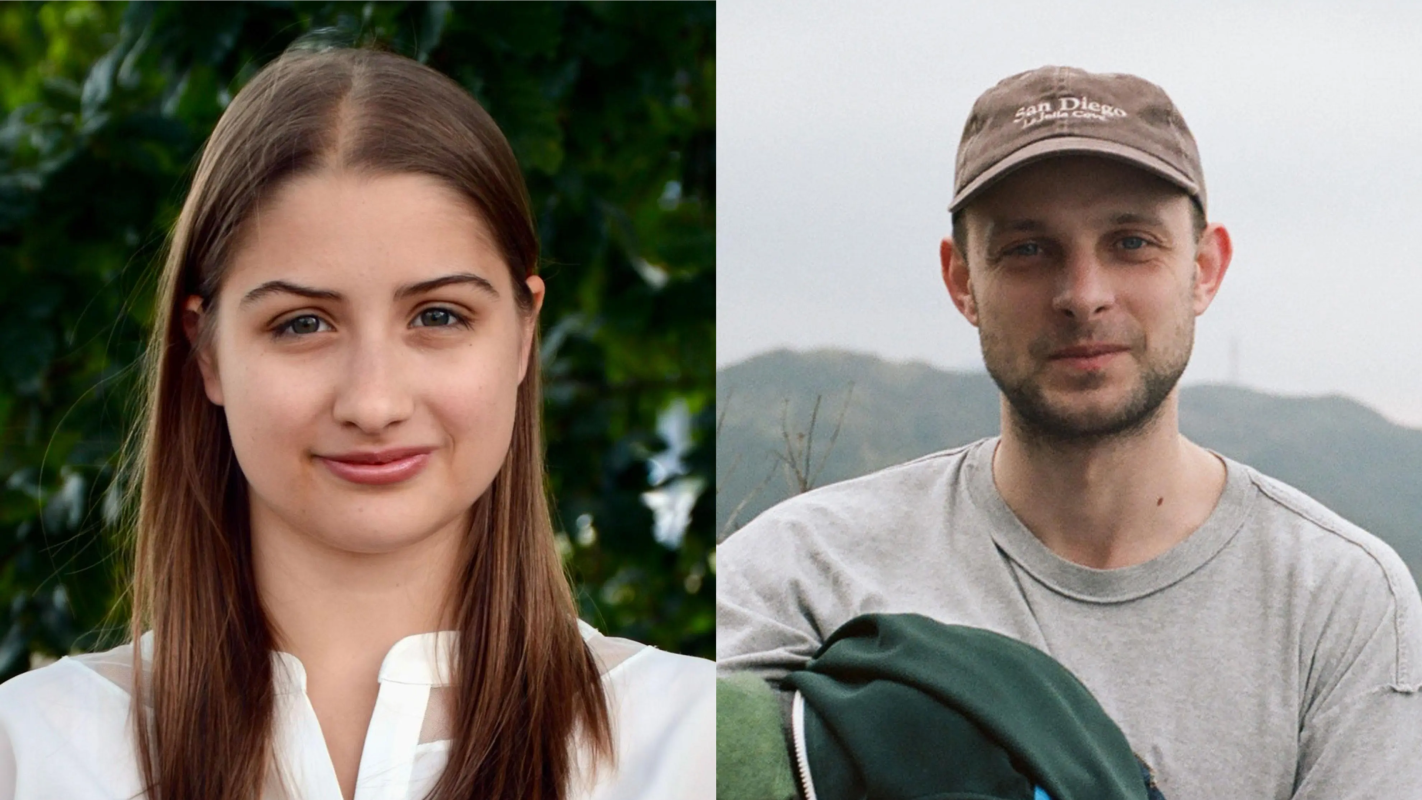
Left: Alina Heise (© private); richt: Jan Paul Reimann (© private)
How do students enrolled in an RMU joint degree program balance their studies across two campuses? Two students at different stages of their academic journey share how the experience has shaped their studies – and their future plans.
Finding the Right Master’s Program
After completing her bachelor's degree in Political Science and Sinology at Goethe University Frankfurt, Alena Heise knew she wanted to remain in the Rhine-Main region for her master’s studies. She had already become familiar with the master’s program in International Studies/Peace and Conflict Research during her undergraduate degree. “Under the previous examination regulations, some of the political science specialization modules already included master’s-level courses,” she explains. “That’s how I first came across the program, for example through Professor Lisbeth Zimmermann’s NMUN seminar.” The program’s excellent reputation was another deciding factor. “It’s highly competitive,” Heise says. “There are a lot of applicants.” What attracted her most, however, was the program’s collaborative structure. In addition to being jointly offered by Goethe University and TU Darmstadt, it is closely linked to the Leibniz Institute for Peace Research and Conflict Studies (PRIF), giving students direct access to leading researchers in the field.
Students are enrolled at both universities, benefiting from two academic environments, two library systems and an expanded network of international partner universities. Unexpectedly, Heise found herself spending more and more time in Darmstadt. “Through the compulsory elective module on Scientific and Technological Peace and Conflict Research, I discovered an entirely new perspective. A technical university offers fascinating interdisciplinary links and seminars that you don’t necessarily expect.” She will also complete her research internship at TU Darmstadt and, from August onwards, work there as a student assistant. “In a way, the focus of my studies has gradually shifted towards Darmstadt – even though I’m only in my second semester.”
Professor Lisbeth Zimmermann, Director of the International Studies/Peace and Conflict Research program at Goethe University Frankfurt, believes the partnership offers clear academic advantages. “The RMU program was a real pioneer. Collaborating with TU Darmstadt perfectly complements Goethe University’s strengths, particularly in areas such as climate policy, cybersecurity, and technology and disarmament. At the same time, PRIF brings outstanding research expertise and regional knowledge directly into the classroom, creating significant added value for our students.”
Jan Paul Reimann is approaching the end of his studies, having recently submitted his master’s thesis. After earning his bachelor’s degree in Berlin, he moved to Frankfurt specifically to enroll in the master’s program in Political Theory. “The program is unique in Germany because of its academic focus,” he says. “I had already specialized in political theory during my bachelor’s degree and was considering an academic career. Whenever I read particularly influential work in the field, scholars from Goethe University were frequently involved. The Research Centre for Normative Orders also stood out internationally.” The joint program combines the expertise of Goethe University Frankfurt and TU Darmstadt, allowing students to draw on the distinct strengths of both institutions. “Darmstadt has a stronger emphasis on the history of political thought, while Frankfurt is particularly strong in normative political theory and philosophy. The two approaches complement each other exceptionally well.”
Professor Rainer Forst, who heads the program at Goethe University Frankfurt, agrees. “Our master’s program in Political Theory has existed for almost twenty years and remains unique in Germany. By combining Frankfurt’s internationally recognized tradition in political theory and social philosophy with Darmstadt’s expertise in democratic theory, we have created an interdisciplinary program that attracts outstanding students from Germany and abroad. Students also benefit enormously from the opportunity to spend part of their studies overseas.”
Studying Across Two Campuses
Studying at two universities naturally means travelling between two campuses. “It’s definitely something you have to plan for,” says Reimann. “The commute between Frankfurt and Darmstadt – and back home – takes time. Most students organize their timetable so they spend an entire day at one campus rather than travelling back and forth.” Heise has adopted a similar strategy. “My journey to Frankfurt is already fairly long, and Darmstadt is another leg of the trip. But with careful planning – and occasional block seminars – you don’t need to commute every day.”
Has studying changed compared with their bachelor’s program? For Heise, interaction with fellow students has become even more important. “Of course I spend a lot of time reading – both in the library and at home – but discussions with other students, especially during seminars, are an essential part of learning.”
Reimann agrees. “Political theory and philosophy naturally involve a great deal of reading, and that was already true during my bachelor’s degree. What has changed is the level of collaboration. Because everyone shares a strong interest in the subject, this particular master’s program makes it very easy to form reading groups and work through texts together.”
International experience is an integral part of both master’s programs. Many seminars are taught in English, and students are encouraged to spend time abroad. Next semester, Heise will study at Ewha Womans University in Seoul through TU Darmstadt’s exchange program. “It gives me the opportunity to strengthen the East Asian focus of my degree.” While she can imagine pursuing an academic career, she is equally interested in working in public administration or for an international organization.
Reimann also chose to spend part of his studies abroad. “The Political Theory program has an exchange partnership with the New School for Social Research in New York, supported by a DAAD scholarship. I definitely wanted to take advantage of that opportunity, and it exceeded my expectations.” The experience has already opened new academic doors. “It allowed me to build valuable international networks and explore different academic environments. This autumn, I’ll be moving to Columbia University to begin my doctoral studies.”
Text: Dirk Frank (originally published in the UniReport of Goethe University Frankfurt)