RHINE-MAIN UNIVERSITIES SUCCESSFUL WITH A TOTAL OF EIGHT APPLICATIONS FOR COLLABORATIVE RESEARCH CENTRES
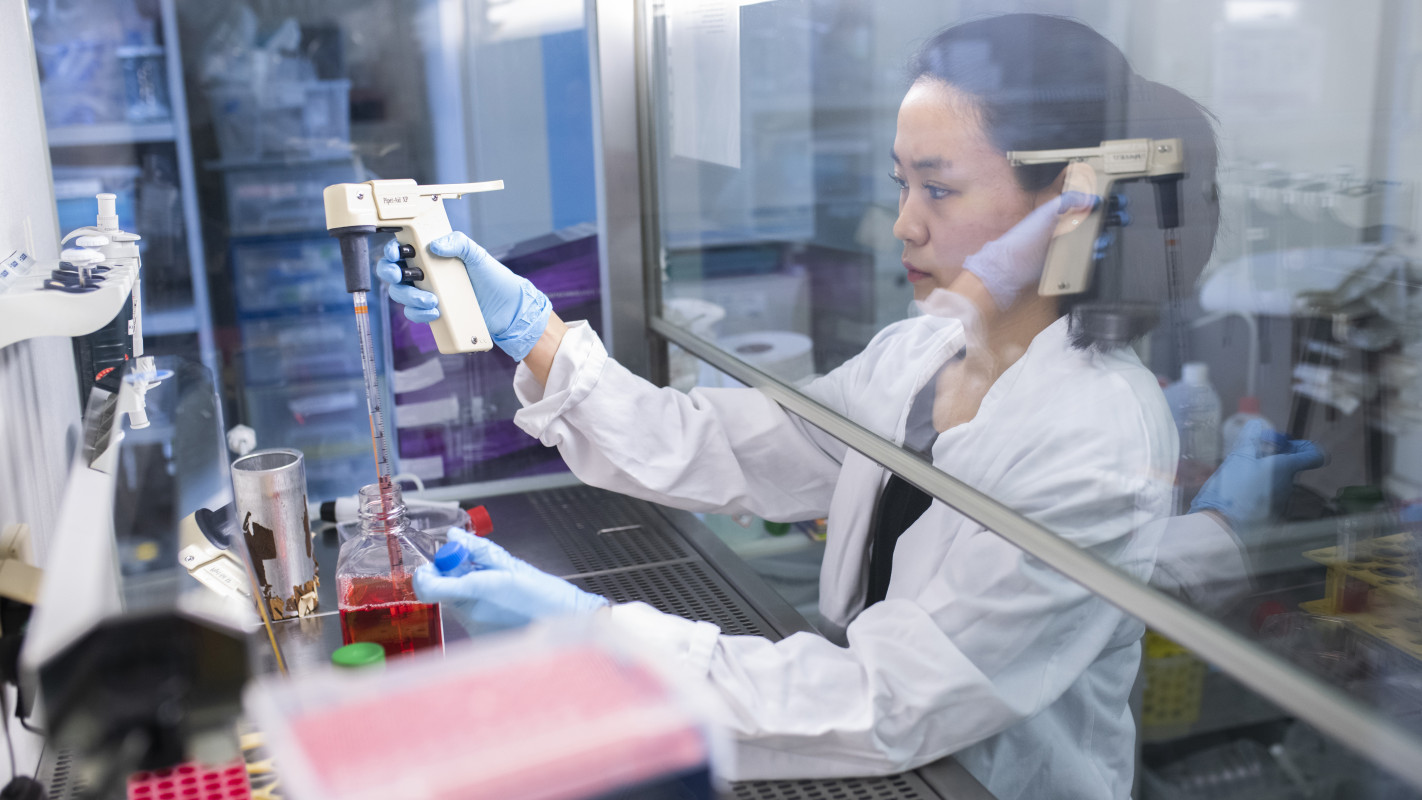
Bild: Goethe-Universität Frankfurt / Peter Kiefer
In the latest funding round of the German Research Foundation (DFG) for Collaborative Research Centres (CRC), the Rhine-Main Universities (RMU) have been very successful.
As the DFG announced on 15 May 2026, four new CRC with RMU leadership or RMU participation were approved: CRC/TRR 440 “smART, ‘Specific mRNA targeting’,” CRC 1767 “Paper”, CRC/TRR 460 “Dynamics of Immunological, Glial, and Neuronal Network Interaction” and CRC 1784 “The Interplay of Thrombosis and Inflammation – Translating Molecular Mechanisms into Clinical Applications (InTrac)”.
Four CRC led by or involving the RMU were also extended: CRC 1507 “Protein Assemblies and Machinery in Cell Membranes” CRC 1531 “Damage Control by the Stromal-Vascular Compartment”, CRC 1487 “Iron, upgraded!” and CRC/TRR 234 “Light-Driven Molecular Catalysts in Hierarchically Structured Materials – Synthesis and Mechanistic Studies”. In half of the eight Collaborative Research Centres mentioned, at least two RMU partners are collaborating.
An overview of the newly established Collaborative Research Centres:
CRC/TRR 440 smART, “Specific mRNA Targeting”
For a long time, mRNA was regarded in the life sciences merely as a passive, short-lived messenger substance. The experiments of Katalin Karikó and Drew Weissman – honoured with the Nobel Prize in 2023 – initiated a radical change in this assessment, and mRNA demonstrated its enormous application potential in vaccines against the SARS-CoV-2 virus. Today it is known that mRNA molecules do far more than transport the blueprint for proteins; they regulate protein production on numerous levels. The Collaborative Research Centre/Transregio 440 smART, “Specific mRNA Targeting”, aims to develop chemical-biological tools for specifically targeting mRNA molecules. TRR 440 spokesperson Professor Harald Schwalbe of Goethe University explains: “With the help of chemical and biological tools that target specific messenger RNA, we can deliberately increase or decrease the concentration of the corresponding protein in the cell. This will help us better understand how cell biology functions and what goes wrong in diseases.” Co-spokesperson Prof. Julia Weigand of Philipps University Marburg is convinced: “Methods that can eliminate certain disease-relevant mRNA are already scientifically established. With the toolbox we will develop, we will also be able to increase the production of proteins, for example to compensate in future for disease-related deficiencies.” TRR 440 will receive total funding of €12.3 million until 2030. The spokesperson institutions are Goethe University Frankfurt and Philipps University Marburg; partners include Justus Liebig University Giessen, TU Darmstadt, the Max Planck Institute of Biophysics, Heidelberg University, and the University of Freiburg. This CTC/TRR strengthens the RMU's profile area“Health”.
CRC 1767 „Paper“
Paper is an intriguing material from a scientific perspective. It has outstanding recycling rates superior to other soft materials and is biodegradable, characteristics which render it particularly sustainable. It possesses unique mechanical properties, fluidic properties as well as interfacial properties. This has also given rise to new ideas for future high-tech applications, such as sensors, light-weight constructive materials or 4D-printed soft-robots. However, the relationship between the chemical and geometric structure of paper and its properties is not yet sufficiently understood to turn these visions into real-world applications. This is where the new CRC “Paper” comes in. Professor Markus Biesalski, who serves as the spokesperson for the newly established CRC “Paper” and is the head of the Macromolecular and Paper Chemistry research group at TU Darmstadt, elucidates the significance of a comprehensive understanding of the structural intricacies of paper in determining its unique properties. “This profound knowledge paves the way for the development of functional and tailor-made paper-based materials and composites, thereby unveiling hitherto unexplored domains of application for paper.”
Researchers from five departments at TU Darmstadt will collaborate with external colleagues to investigate the relationships between fibres and paper structure, manufacturing processes, the properties of paper products, and potential applications. Both experimental and computer-aided methods and models will be employed. The researchers are initially focusing on three application areas for paper materials of the future: paper-based sensors, lightweight materials for applications in engineering or construction, and robotic systems made with paper as the flexible base material.
The CRC “Paper” will launch on 1 October, will initially receive funding until 2030 and strengthens the RMU’s profile area “Matter”. It will build upon TU Darmstadt’s extensive expertise in the field of paper research, including the LOEWE research cluster “BAMP! – Building with Paper” – funded by the State of Hesse – and, several other collaborative projects funded by the DFG, the Federal Ministry of Research, Technology and Space, and the European Union. Researchers from the departments of Chemistry, Mechanical Engineering, Materials and Earth Sciences, Biology, and Physics at TU Darmstadt, as well as from the University of Freiburg, Saarland University, Friedrich-Alexander University Erlangen-Nuremberg, Mainz University of Applied Sciences, and the Heidenau Institute for Fibres & Paper, are conducting research within the new CRC “Paper”.
CRC/TRR 460: Dynamics of Immunological, Glial, and Neuronal Network Interaction
The new CRC/TRR focuses on how immune cells, glial cells, and neurons are linked in the brain and what form of changes the corresponding cellular networks undergo in the presence of disorders. The clinical research team headed by Professor Stefan Bittner and Professor Frauke Zipp from the Department of Neurology at the University Medical Center Mainz and Sven Meuth, Director of the Department of General Neurology of Münster University Hospital, will be looking in particular at neurological and psychiatric diseases, such as multiple sclerosis, depression, and other forms of neuropsychiatric illness, including dementia. The researchers intend to use their findings, over the long term, to be able to better predict disease progression and to develop innovative treatment approaches designed to influence the cellular networks.
It has long been assumed that the blood-brain barrier acts as a largely effective shield against the immune system, thus protecting the susceptible nervous system against inflammation. The projects being sponsored by the DFG will continue the internationally eminent work already undertaken in Mainz and Münster that has revealed that immune cells closely interact with neurons and so-called glial cells. Among other things, glial cells supply neurons with nutrients and support them when it comes to transmitting signals. At the same time, they play important roles in connection with cerebral inflammatory processes. Should the cellular networks become unbalanced, this can facilitate the onset of neurological and psychiatric disorders and exacerbate any existing diseases. For this reason, the members of the new CRC/TRR 460 will be examining how these cellular networks regulate healthy cerebral functions and what alterations are prompted by disease processes. They will be employing state-of-the-art analytical methods for this purpose. These will include multiome analysis, single-cell sequencing, and high-resolution imaging techniques, including magnetic resonance imaging (MRI) and magnetoencephalography (MEG). The cellular networks will be investigated in artificial environments in vitro as well as in animal models, while computer-aided modeling will also be employed. Clinical trials will supplement these methods.
The spokesperson of CRC/TRR 460 is Professor Stefan Bittner, senior physician at the Department of Neurology of University Medical Center Mainz. Co-spokespersons are Professor Frauke Zipp, Director of the Department of Neurology of University Medical Center Mainz, and Professor Sven Meuth of Münster University Hospital. Other partners of the research consortium are Heinrich Heine University Düsseldorf, the University of Cologne, and Forschungszentrum Jülich. The DFG will be financing the project to the tune of more than EUR 12 million.
CRC 1784: The Interplay of Thrombosis and Inflammation – Translating Molecular Mechanisms into Clinical Applications (InTrac)
The purpose of this new CRC is to investigate the interactions between undesirable blood coagulation and inflammatory reactions. These processes play a central role in disorders such as cardiovascular diseases, inflammation, and vascular damage. The aim is to better understand how inflammation influences the formation of thromboses, and how coagulation processes, in their turn, can exacerbate inflammation. The long-term goals are to be able to detect pathological processes at an early stage with the help of the research results, thus providing more targeted treatment, and to develop new approaches to diagnosis, prevention, and the therapy of so-called thromboinflammatory disorders. With this in mind, the research collaboration will be employing a translational approach to obtain insights through fundamental research that can be converted to clinical applications as rapidly as possible. The researchers will be making use of cutting-edge microbiological techniques, such as so-called multi-omics analysis, a method combining data on genes, proteins, and metabolic products. Also to be employed are bioinformatics analysis together with innovative animal models and imaging techniques. The researchers also aim to develop innovative treatment concepts, including RNA-based approaches, gene, and cell-based therapeutic strategies.
Participating in CRC 1784 on the part of University Medical Center Mainz are Magdalena Bochenek, Professor Christoph Reinhardt, and Professor Wolfram Ruf of the Center for Thrombosis and Hemostasis, Professor Katrin Schäfer of the Department of Cardiology, and PD Nadine Müller-Calleja of the Institute of Clinical Chemistry and Laboratory Medicine. The spokesperson is Professor Steffen Massberg, Director of Medical Clinic and Polyclinic I of the University Hospital of Ludwig-Maximilians-Universität München. The project is to receive some EUR 12.8 in funding.
An overview of the extended Collaborative Research Centres:
CRC 1507 “Protein Assemblies and Machinery in Cell Membranes”
This CRC is dedicated to researching large protein complexes in cell membranes. Such membrane-embedded or membrane-associated protein complexes convert energy, transport nutrients, metabolic products or signaling molecules, mediate interactions with pathogens, and thus enable interactions between the “inside” and the “outside.” CRC 1507 seeks to understand the organizational and functional principles of these large, dynamic protein complexes, for example how these complexes cooperate in cellular self-defence or communication processes. Collaborative Research Centre 1507 will receive total funding of €15.7 million until 2030. Goethe University, under the leadership of Professor Robert Tampé, is the lead institution. Partners include the Max Planck Institute of Biophysics, Johannes Gutenberg University Mainz, and Friedrich Schiller University Jena. This CRC, a joint initiative of two RMU partners, contributes to the RMU’s “Health” profile area.
CRC 1531 “Damage Control by the Stromal-Vascular Compartment”
This CRC investigates how connective tissue, or stroma, in the body supports the healing of damaged organ structures. The focus is on repair processes triggered after injuries to the brain, heart, or blood vessels as a result of cardiovascular diseases such as heart attacks. Various cells act in a highly coordinated manner during these complex processes. Understanding this interplay provides the basis for finding ways to medically support the body’s own healing processes. Collaborative Research Centre 1531 will receive total funding of €17.1 million until 2030. Goethe University (Professor Ralf Brandes) is the spokesperson institution. Partners include the Max Planck Institute for Heart and Lung Research in Bad Nauheim, the Berlin Institute of Health at Charité, Heidelberg University Hospital, and Johannes Gutenberg University Mainz. Two partners in the Strategic Alliance of the Rhine-Main Universities are collaborating on this Collaborative Research Centre with the universities in Frankfurt and Mainz. This CRC strengthens the RMU’s “Health” profile area.
CRC 1487 “Iron, upgraded”
The Collaborative Research Centre addresses the challenge that, in pursuit of a sustainable future, many materials and processes need to be rethought, as they rely on rare, toxic or critical elements.
In this context, iron is a highly promising alternative, being inexpensive, environmentally friendly and chemically versatile. Its high and often uncontrolled reactivity, however, has so far stood in the way of broader application. “Our vision is that, with the help of chemistry, we can modulate iron's environment in such a way that its reactivity and properties can be precisely controlled for sustainable applications,” explains the CRC's spokesperson, Professor Ulrike Kramm. Possible fields of application range from catalysis for the sustainable production of base chemicals, through fuel cells in the automotive sector, to novel magnetic materials for cooling systems and wind turbines. On the strength of its compelling scientific achievements, the CRC “Iron, upgraded” will therefore enter its second funding period, running from July 2026 to the end of 2029.
The CRC “Iron, upgraded”, which strengthens the RMU’s profile area “Matter”, brings together expertise on iron, with the involvement of the two other Rhine-Main universities, Frankfurt and Mainz, as well as the partner universities of Heidelberg, Paderborn and Bayreuth, the Technical University of Munich and the Max Planck Institute for Chemical Energy Conversion.
CRC/TRR 234: Light-Driven Molecular Catalysts in Hierarchically Structured Materials – Synthesis and Mechanistic Studies
The CRC/TRR 234 has been granted a third funding period. This research collaboration is investigating the fundamental aspects of sunlight-driven catalysis based on the model of natural photosynthesis. Molecular photosensitizers and catalysts are embedded in functional soft matter matrices, such as polymers and biopolymers, in order to create artificial photosynthetic architectures. These can transform sunlight directly into chemical energy – for example, in the form of green hydrogen by means of light-driven splitting of water. In this new funding period, the emphasis will be on complete integration of the developed material systems in flow photoreactors equipped with online analytics and the targeted replacement of noble metal-based compounds by more sustainable alternatives. It is expected that the combination of cutting-edge experimental techniques and high-quality quantum chemical calculations will lead to in-depth insights into the reactivity of these systems across various dimensional and time scales.
Professor Carsten Streb of the Department of Chemistry is participating on behalf of JGU. In the CataLight project, his team is developing innovative, noble metal-free catalysts to be used for light-driven water oxidation and hydrogen generation, together with 3D printing techniques that can be employed to create microstructured photoreactors. In this new funding period, the DFG will be providing some EUR 14 million to the CRC/TRR over four years. Also participating, in addition to Ulm University acting as the speaker university, are Friedrich Schiller University Jena, Carl von Ossietzky University Oldenburg, the University of Vienna, the Leibniz Institute of Photonic Technology in Jena, the Leibniz Institute of Surface Engineering in Leipzig, and the Max Planck Institute for Polymer Research in Mainz.
Background:
Collaborative Research Centres (CRC) are joint university projects funded by the German Research Foundation for up to twelve years, in which researchers collaborate across disciplines. They enable ambitious, long-term research projects and serve to shape research priorities and structures. In the new funding round, 13 CRCs were newly established and 25 were extended. From October 2026, the DFG will fund a total of 260 of these collaborative projects.