Save the date: RMU AI and Creativity Symposium
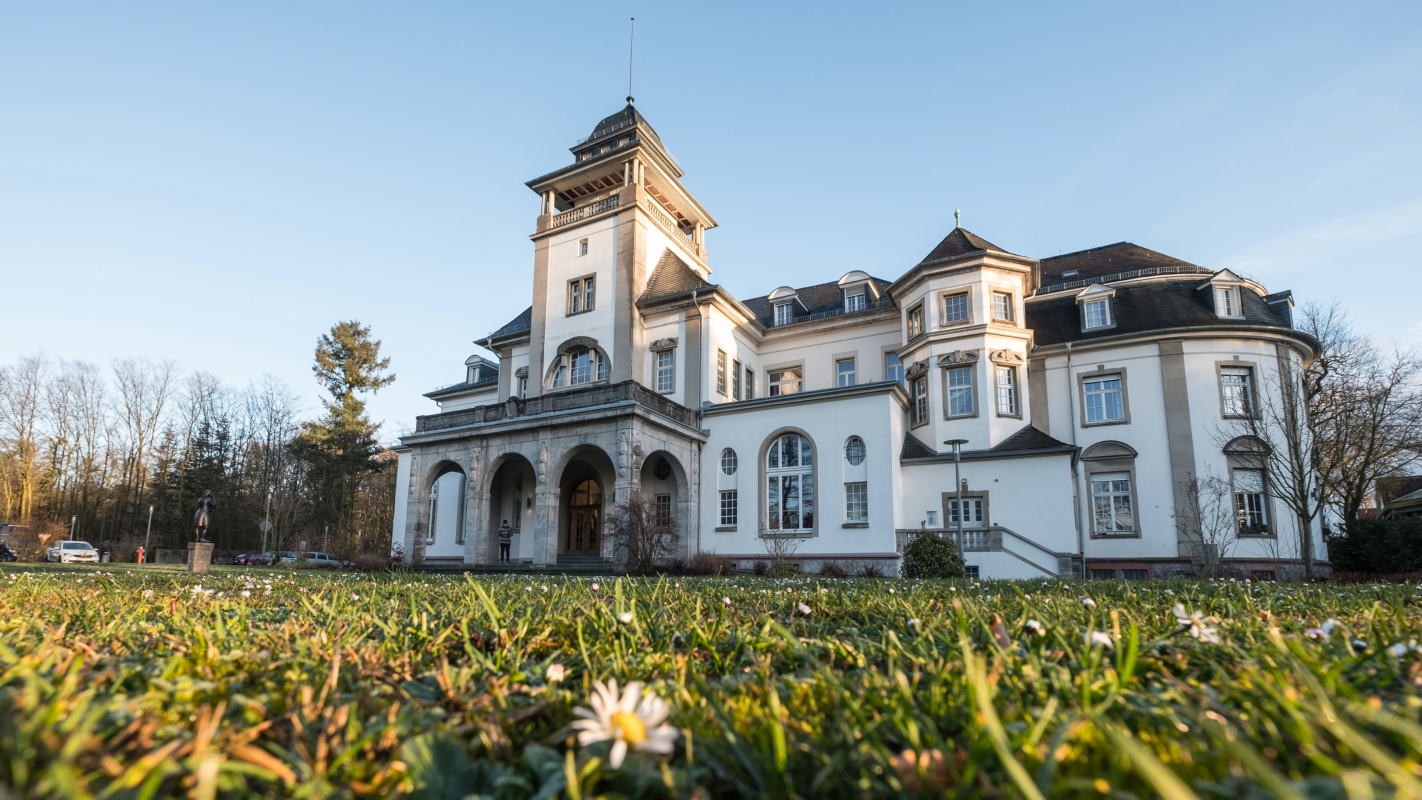
TU Darmstadt / Felipe Fernandes
On 16 April 2026, the Rhine-Main Universities Goethe University Frankfurt, Johannes Gutenberg-University Mainz and Technical University of Darmstadt invite researchers to participate in the RMU AI & Creativity in Darmstadt.
While the event is aimed primarily at researchers from the three Rhine-Main Universities, external guests are very welcome to participate.
Location:
Georg-Christoph-Lichtenberg-Haus, Dieburger Str. 241, 64287 Darmstadt
Date and times:
16 April 2026, 10:00 am – 6:00 pm
Please register via the link on the right. Participation in the event is free of charge.
Program and content
With the rapid advancement of generative models and autonomous agents, it is becoming increasingly difficult to distinguish between statistical imitation and actual creativity. This interdisciplinary one-day symposium goes beyond established narratives surrounding artificial intelligence and explores the structural and cognitive parallels between biological and artificial forms of creation. By bringing together leading researchers from the fields of machine learning and cognitive science, the symposium aims to create a space for in-depth analysis and interdisciplinary exchange, enabling new insights into how AI systems explore large search spaces for novelty and functional utility, and into the creative potential already inherent in current systems.
Building on the 2024 conference Bridging Fields in Creativity in Oppenheim, which focused on the neural mechanisms underlying creative processes, this symposium shifts attention to the computational architectures that simulate, augment, or potentially redefine creativity as a core capability of intelligent systems.
Confirmed speakers
- Simon Colton (Queen Mary University of London)
- Giorgio Franceschelli (Universität Bologna)
- Jennifer Haase (Humboldt-Universität zu Berlin)
- Linoy Tsaban (Huggingface)
- Tom Zahavy (Google DeepMind)
Call for abstracts
The symposium will feature a poster session offering researchers the opportunity to present recent work in AI and creativity. Topics of interest include, but are not limited to:
- Computational creativity and creative AI systems
- Creative problem solving in neural networks
- Generative models and open-ended learning
- Links between human and artificial creativity
- Human-AI collaboration and co-creative systems
Submissions may be based on work that has already been published in conferences or journals. Contributions that include demonstrations are particularly welcome. Abstracts are to be submitted in English.
Abstract submission deadline: 21 March 2026 (AoE)
Poster Acceptance Notification: 21 March 2026 (AoE)
Organization
The event is organized by Prof. Dr. Simon Rumpel (Johannes Gutenberg University Mainz), Prof. Dr. Matthias Kaschube (Goethe University Frankfurt) and Prof. Dr. Kristian Kersting (TU Darmstadt) as well as Jonas Elpelt (Goethe University Frankfurt), Matthias Lang, Daniel Ochs and Antonia Wüst (all TU Darmstadt).
Additional details on the program will be published here soon!
Downloads
- Program (108.79 KB)